Thinking Pruning is Just Chopping Branches? Think Again.
I’ve been working with trees here in Billings for a long time, and one thing I see way too often is homeowners making big mistakes when it comes to tree pruning. It’s not just about cutting off a few branches; there’s a real art and science to it. Get it wrong, and you’re not just looking at an ugly tree, you could be setting it up for disease, structural failure, or even an early death. And believe me, a dead tree costs a lot more to deal with than a properly pruned one.
Mistake #1: Hiring the Cheapest Bid Without Checking Credentials
This is probably the biggest one. Everyone wants to save a buck, I get it. But when someone gives you a bid that’s significantly lower than everyone else, there’s usually a reason. Are they insured? Do they have workers’ comp? A lot of fly-by-night operations pop up after a big windstorm, offering rock-bottom prices. They might not know proper pruning techniques, they could damage your property, or worse, someone could get hurt on your land, and you could be liable if they’re not properly insured. Always ask for proof of insurance – liability and workers’ compensation. A legitimate company like Billings Stump Removal & Tree Service won’t hesitate to show you theirs.
Mistake #2: Topping Your Trees
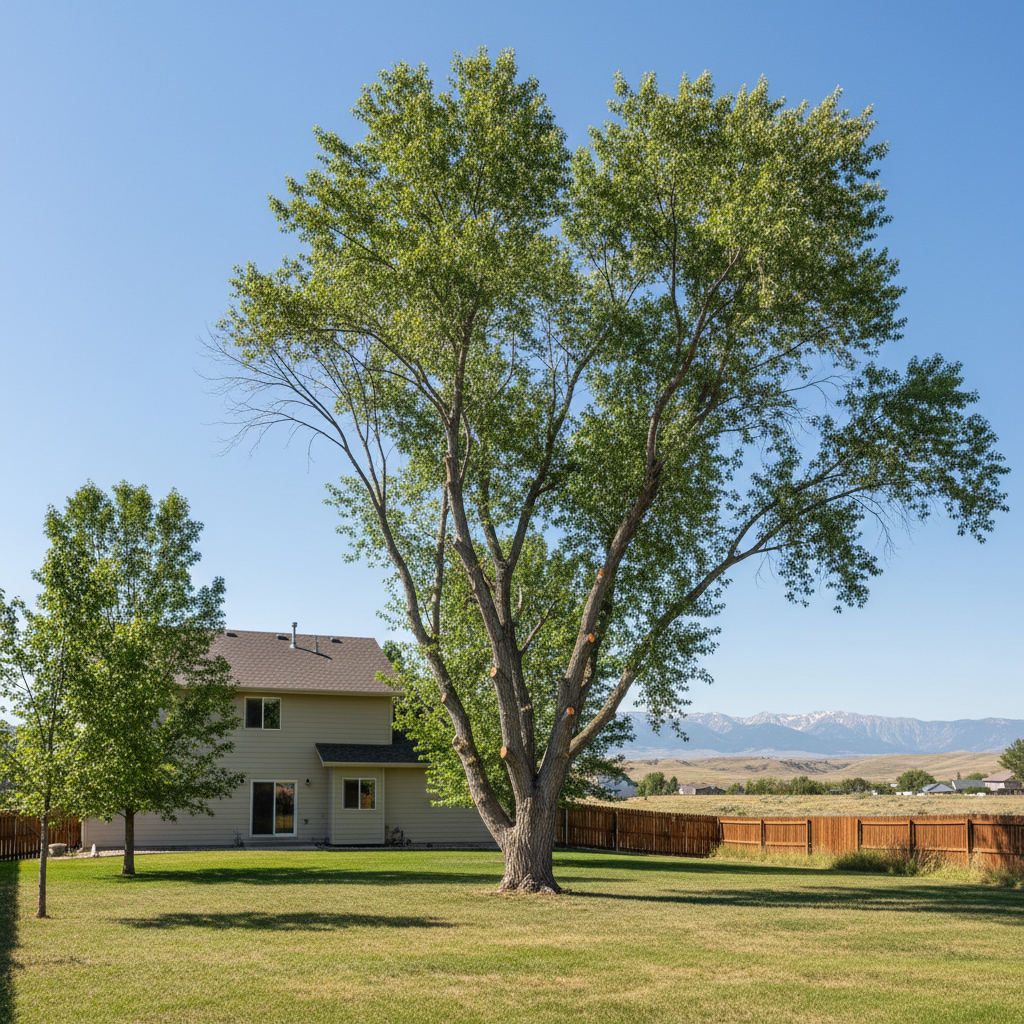
If there’s one thing that makes me cringe, it’s seeing a topped tree. Topping is when someone cuts off the main leaders or large branches, leaving stubs. People think it makes the tree smaller or safer. What it actually does is stress the tree out big time, encourages weak, rapid growth (often called 'watersprouts' or 'suckers') that are more prone to breaking, and opens the tree up to disease and insect infestation. It’s a short-term fix that creates long-term problems, often leading to a much more expensive removal down the road. Proper pruning involves selective removal of branches to improve structure, health, and appearance, not just hacking off the top.
Mistake #3: Pruning at the Wrong Time of Year
Timing is everything with trees. Pruning at the wrong time can weaken a tree, reduce flowering, or even invite pests and diseases. For most deciduous trees around here, like our beautiful cottonwoods and ash trees, late winter or early spring (when they’re dormant) is generally the best time. That’s before the leaves bud out. Pruning during the growing season can stunt growth and leave open wounds vulnerable to infection. There are exceptions, of course – some flowering trees are best pruned right after they bloom. A good arborist knows these nuances for different species.
Mistake #4: Not Understanding Tree Structure or Growth Habits
You wouldn’t build a house without understanding its foundation, right? Same goes for trees. Many homeowners, and even some inexperienced 'tree guys,' don’t understand how a tree grows, where its growth points are, or how to make a proper cut. You need to know about the 'branch collar' – that swollen area where a branch meets the trunk or a larger branch. Cutting too close or leaving a stub can prevent the tree from properly sealing the wound, leaving it open to decay. Proper cuts promote healing and maintain the tree’s natural shape and strength.
Mistake #5: Doing It Yourself When It’s Too Big or Too Dangerous
I’ve seen plenty of folks get in over their heads. You might think, 'It’s just a few branches,' but then you’re up on a ladder with a chainsaw, and suddenly you’re dealing with power lines, a precarious limb, or a branch that’s heavier than you thought. Our heavy Montana winds can make even a small branch a hazard. If a branch is large, high up, near power lines, or requires specialized equipment, please, for your own safety and the tree’s health, call a professional. It’s not worth risking an injury or serious property damage just to save a few bucks. We’ve got the gear, the training, and the experience to do it safely and correctly.
Look, your trees are an investment. They add value to your property, provide shade, and make your yard look great. Don’t let a few common mistakes turn them into a liability. Do your homework, ask the right questions, and hire someone who knows what they’re doing. Your trees (and your wallet) will thank you for it.