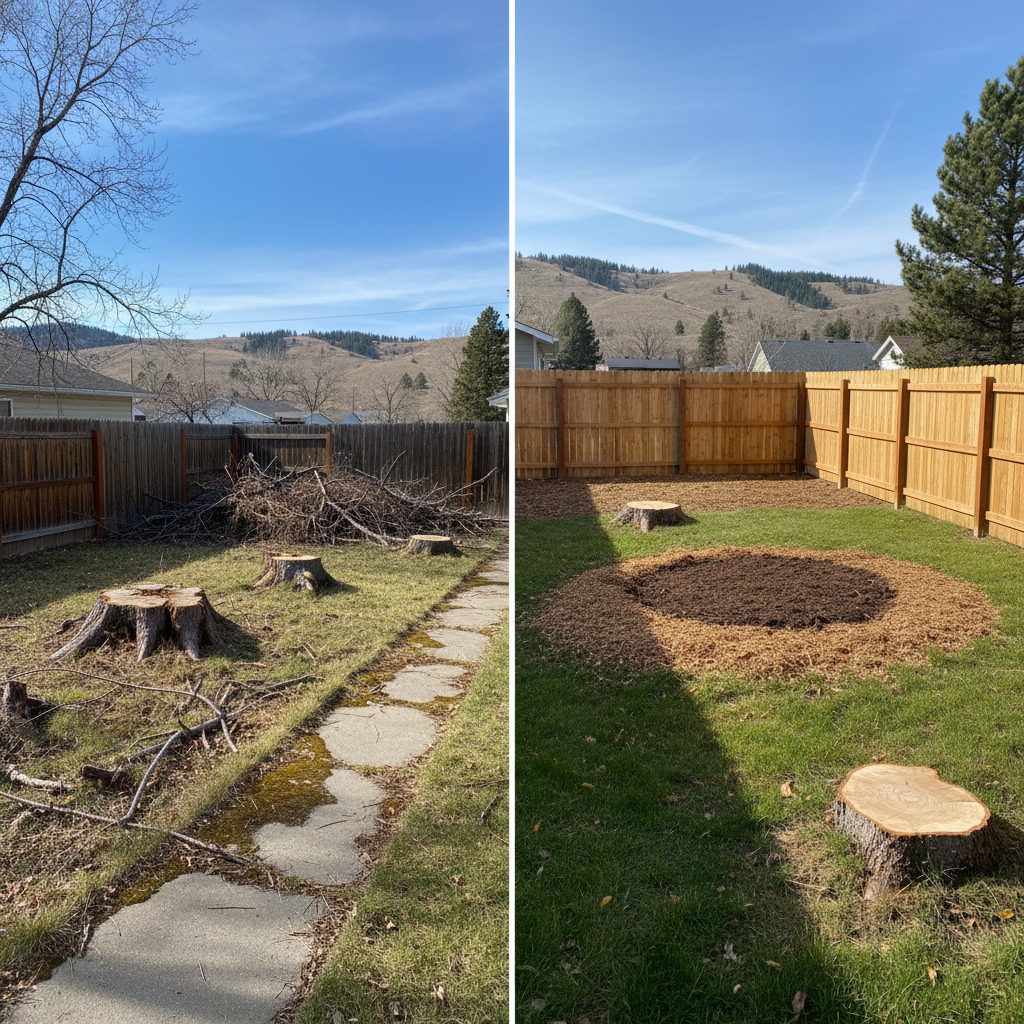
So, a big old Ponderosa or Cottonwood finally gave up the ghost in your yard, maybe after a heavy spring snow or one of those crazy summer windstorms we get here in Billings. First, you get the tree itself cleared out, which is the immediate danger. But then you're staring at that stump, right? You've got two main ways to deal with it: stump grinding or full stump removal. People often ask me which is better, and honestly, it depends on what you're trying to achieve and how much you want to spend.
Stump Grinding: The Quick Fix
Stump grinding is probably the most common method you'll hear about, and for good reason. It's generally quicker, less invasive, and more affordable upfront. What we do is bring in a specialized machine with a big, rotating cutting wheel. That wheel chips away at the stump, grinding it down to wood chips and dirt, usually about 6 to 12 inches below ground level. Sometimes we can go deeper, but that's usually the standard.
Cost: This is where grinding usually wins. It takes less time and less heavy equipment than full removal. You're typically looking at a few hundred bucks, depending on the size of the stump and how deep you want it ground. It's a pretty straightforward job for a company like Billings Stump Removal & Tree Service.
Durability: Well, the stump itself is gone from the surface, but the roots are still there. They'll eventually decompose, but that can take years, even decades, especially for a big old tree. During that time, you might see some settling of the soil as the roots break down.
Maintenance: Once it's ground, you're left with a pile of wood chips mixed with soil. You can use these as mulch, or you can haul them away and fill the hole with fresh topsoil. If you want to plant grass, you'll need to remove most of those chips and add good soil, because grass doesn't grow well in pure wood chip mulch. You might get some mushrooms popping up as the remaining roots decompose, which is normal.
Appearance: On the surface, the stump is gone. You've got a relatively flat area that you can landscape over, plant grass, or even put a small flower bed. It looks much tidier than a big, ugly stump.
Full Stump Removal: Getting to the Root of It
Full stump removal, on the other hand, means exactly what it sounds like: we're not just grinding it down; we're digging out the entire stump and as much of the major root ball as possible. This is a much more involved process, often requiring an excavator or other heavy machinery, especially for large stumps.
Cost: This is where it gets pricier. Because it's more labor-intensive, takes more time, and often requires heavier equipment, the cost can be significantly higher than grinding. We're talking potentially thousands of dollars for a really big stump, especially if it's in a tricky spot or has a massive root system.
Durability: This is the most permanent solution. With the entire stump and major roots gone, you won't have to worry about future settling, root regrowth, or any issues from decaying wood underground. You're left with a clean slate.
Maintenance: Once the stump and roots are out, you'll have a larger hole to fill. You'll need to bring in a good amount of fresh topsoil to fill it completely. After that, you can plant anything you want – new trees, shrubs, or just lay down sod. No worries about wood chips or decaying roots interfering with new growth.
Appearance: You get a completely clear area. There's no trace of the old stump, just a patch of fresh earth ready for whatever you envision. This is the best option if you're planning to build something, pour concrete, or plant a new tree in the exact same spot.
My Recommendation for Billings Homeowners
For most homeowners in Billings, especially if you're just looking to get rid of an eyesore and reclaim some yard space, stump grinding is usually the way to go. It's cost-effective, relatively quick, and gets the job done for 90% of situations. You can plant grass over it, put in a garden bed, or just make the area look tidy.
However, if you're planning on building a shed, pouring a concrete pad, putting in a new driveway, or planting a new tree in the exact same spot where the old one stood, then full stump removal is definitely worth the extra investment. You don't want a concrete slab cracking in a few years because a decaying root underneath caused settling, or a new tree struggling because its roots are competing with the old ones. Given our clay-heavy soils here in the Billings area, decaying roots can sometimes create pockets that lead to uneven settling, which is something to consider.
Ultimately, it comes down to your budget and your long-term plans for that specific spot in your yard. Give us a call at Billings Stump Removal & Tree Service, and we can come out, take a look at your stump, and give you an honest assessment of both options and what makes the most sense for you.